On this page
A well-fitted harness does more for travel safety than any leash upgrade, because most escapes happen in the first 30 seconds outside the car.
Use this quick checklist before you pack:
- Harness fit: two fingers under every strap, no armpit rub, dog cannot back out when gently pulled backward
- Attachment points: front chest ring for steering plus back ring for steady walking
- Leash length: 4 to 6 feet of flat nylon or biothane, with a locking carabiner-style clip
- Backup: martingale collar or slip lead plus current ID tags and records
- Car plan: crash-tested carrier or secured restraint, never a leash tied to a headrest
- Practice walk: one 20-minute neighborhood walk in the full travel setup
The risk that matters most on the road
Vets often see the same travel story: a healthy, friendly dog slips gear in a strange parking lot and panics. New smells, truck brakes, and slick rest-stop pavement raise arousal and lower recall, so your equipment has to support normal movement without giving the dog an exit.
That is why I counsel expectation first. A harness may help support control of the shoulders and chest during sudden lunges, while a collar alone concentrates pressure around the neck. The American Veterinary Medical Association reminds owners that secure restraint and identification are core parts of pet travel planning, and that principle applies on foot as well as in the car.
Escape is fast.
Tracy adopted a routine for Manchita, her 6-year-old spayed Cairn Terrier, after the little dog backed out of a loose step-in harness at a Texas rest stop. The observable sign was clear: ears back, low crawl, then a reverse-shuffle out of the vest. Tracy switched to a Y-front harness with three adjustment points, added a snug martingale collar as backup, and now does a 10-foot backup-pull test before every walk.
Leash myths that fall apart at a rest stop
Myth: a longer leash gives a traveling dog more freedom safely. Reality: a 16-foot retractable line near traffic, ferries, and trailheads makes a sudden bolt harder to stop and easier to tangle. The Centers for Disease Control and Prevention notes that travel exposes pets to unfamiliar environments and rules by plane, car, and ship, so predictable control matters more than range.
For most trips, pack a fixed 4- to 6-foot leash with a comfortable handle and a clip you can operate with cold hands. Biothane or coated nylon wipes clean after mud and rain, flat webbing is kinder on hands than rope for small breeds, and a second lightweight slip lead in your daypack is cheap insurance if a buckle breaks. If you are crossing water, review ferry and boat rules before you board, since many lines require short fixed leashes on deck.

Choose in this order: harness, leash, backup
Build your system around the harness, then match the leash to it.
1. Harness shape and fit. For travel, most dogs do best in a Y-front harness with adjustment at neck, chest, and girth. Look for a padded chest plate, a belly strap set 2 inches behind the elbows to reduce chafing, and both front and back leash rings. Measure girth with a soft tape, check the maker’s size chart, and recheck fit after meals and coat changes. Senior dogs like Maxx, an 11-year-old Yorkshire Terrier traveling with owner Benjamin through Las Vegas, often need fleece-lined straps and a slower 2-week break-in of short indoor sessions to prevent rubs.
2. Leash function. Choose hardware over hype. A locking carabiner or screw-lock bolt snap resists torque better than a standard trigger snap, reflective stitching helps at dusk fuel stops, and a traffic handle near the clip gives close control at curbs. Skip wrist loops that tighten under load and avoid tying a leash around a seatbelt as a car restraint.
3. Backup identification. No harness is escape-proof. Travel with a properly fitted martingale or flat collar carrying tags, plus a microchip with current contact information. Keep vaccine records and a recent photo on your phone, as outlined in dog ID tags and records. For longer timelines, especially abroad, start international paperwork early.
Where a collar still wins
A secure harness is my default for transit days, and I concede plainly where it stops winning. A flat collar is lighter for a calm, leash-trained adult settling into a rental house, and it holds tags more quietly overnight. Dogs with tracheal sensitivity, neck injury, or severe harness anxiety may also need a different plan worked out with their own veterinarian.
Keep it preventive: fit the harness at home, walk your baseline route, then add one new challenge at a time. Realistic timelines help — most dogs need 5 to 7 short sessions to accept new gear without freezing or pawing. If panting, lip-licking, or avoidance persists beyond that window, pause travel training and ask your veterinary team about low-stress handling options.
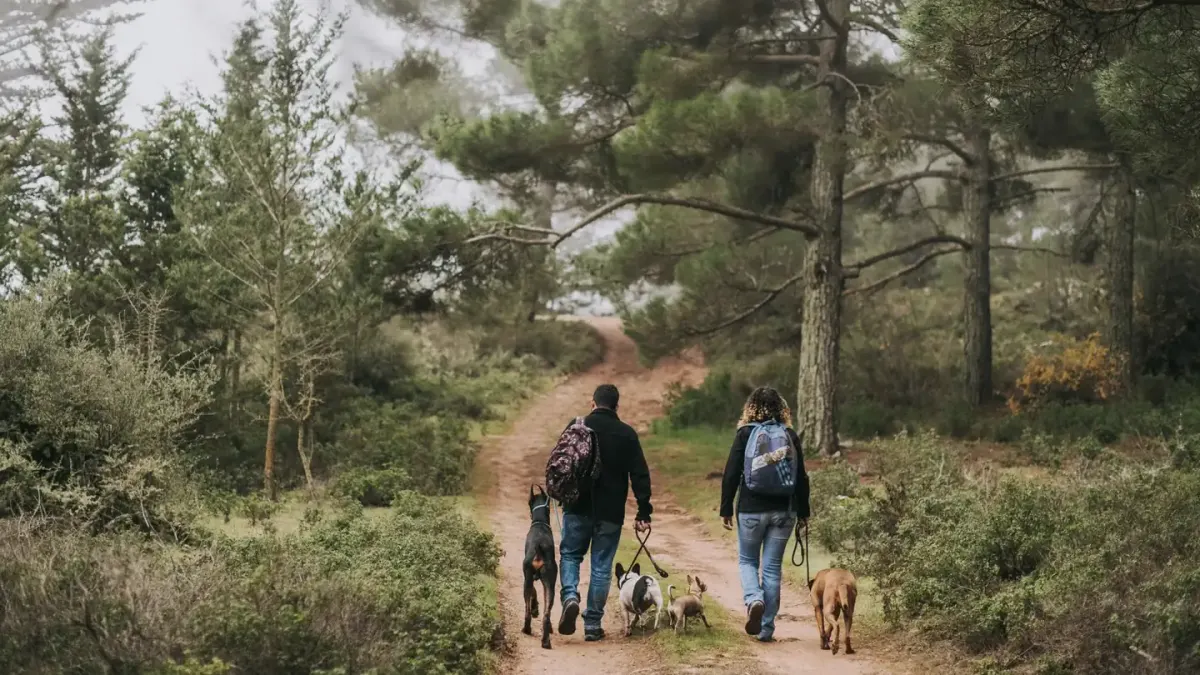
Pack for the dog in front of you, test the system twice, and you will spend the trip enjoying the coastal path instead of chasing down it.
For related context, read Can You Travel With a Dog in Heat? What Actually Matters.
For related context, read Collapsible Bowls and Feeding Gear for Traveling Dogs.
Frequently asked questions
Should my dog wear a harness or collar for travel?
For transit days, a well-fitted Y-front harness with front and back rings usually gives more secure control and distributes pressure across the chest. Bring a collar for ID tags as backup.
What leash length is best for trips?
A fixed 4- to 6-foot flat leash handles rest stops, sidewalks, and ferry decks well. Save long lines for safe open areas away from roads.
How do I stop my dog backing out of a harness?
Choose three or more adjustment points, tighten so you can fit two fingers under straps, and do a gentle backward-pull test at home. Add a backup martingale collar and slip lead for travel days.
Sources
- Traveling With Your Pet — American Veterinary Medical Association
- Traveling With Pets — Centers for Disease Control and Prevention