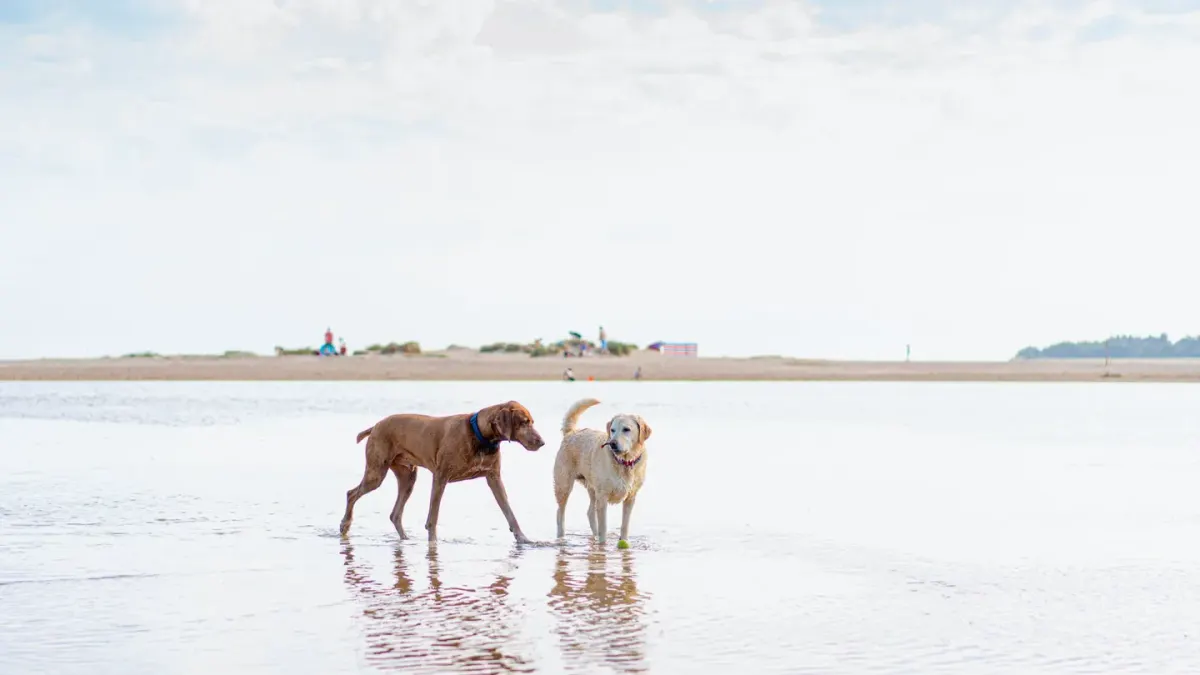
Managing a rest stop well does not mean tiring your dog out first. It means keeping arousal low enough that sniffing, pottying, and reloading back into the car all happen safely.
My counsel to clients starts with expectation first: a highway rest area is built to spike excitement — traffic noise, food smells, strange dogs, tiny grass strips — so your job is not perfect obedience. Your job is a short, repeatable routine that may help support calm behavior and low-stress handling over a 5- to 10-minute break.
Your rest-area calm checklist
- Park away from the main door, trash cans, and dog-walk entrance
- Clip leash inside the car before opening any door
- Walk first to the quiet edge, not the busiest sniff spot
- Give 3 minutes to sniff, then cue potty in one small patch
- Reward four-on-the-floor, then reload before the second wind hits
If you only remember one rule, make it this: distance is easier than discipline.
The limit no routine can erase
Rest areas compress everything exciting into 50 feet. Vets often see dogs who are polite at home lunge, vocalize, or freeze here, and that does not mean training failed. It means the baseline changed.
The American Veterinary Medical Association reminds travelers that unfamiliar places, restraint, and motion changes raise stress, which is why secure leashing and planned stops matter more than a long walk on asphalt. Keep it preventive: plan for a lower level of control and you will get better behavior.
Teresa learned this with Arya, her 7-year-old spayed female Labrador Retriever mix from Birmingham, Alabama. Arya pulled hard toward every picnic table on a 6-hour drive, then finally pottied after Teresa moved 40 yards to an empty edge and waited a full 4 minutes. Same dog, different distance.
Myth: a tired dog is a calm dog
The common advice is to let an excited dog run it out on a long line or play fetch to burn energy. At a fenced dog park that can work. At an unfenced highway stop, it usually backfires.
High-energy play raises arousal, vocalizing, and pulling for the next 10 to 20 minutes. What settles most dogs faster is sniffing at their own pace on a short, loose leash, followed by a clear potty cue and reload.
That is where I take a position: choose sniff-then-potty over play-then-walk for rest areas.
Where play wins is at a true destination stop — a trailhead, beach, or large pet area where you plan to stay 30 minutes or more. You can read more about picking that kind of stop in Rest-Stop Etiquette When Traveling With a Dog. At a quick highway pull-off, play stops winning.
Work the sequence: car to grass and back
Think of the break as a lifecycle: unload, decompress, potty, reload. Keep each phase small.
1. Unload without the explosion. Park on the outer edge of the lot. Clip a 4- to 6-foot leash while doors are still closed, crack one door, and treat for eye contact before feet hit pavement. If your dog surges, close the door and reset once. For more on that moment, see Airport Pet Relief Areas: How They Work.
2. Decompress on the edge. Skip the main dog-walk sign. Walk the perimeter for 2 to 3 minutes and let the nose lead. Loose-leash sniffing may help support mental settling better than heeling drills here.
The Cornell University College of Veterinary Medicine notes that car travel itself can be stressful for some dogs, with panting, restlessness, and vocalizing as common signs, so a quiet sniff buffer helps before you ask for anything.
3. Shrink the potty zone. Pick one low-traffic patch about 10 feet square. Stand still, use the same cue every time, and wait. Movement creates excitement; stillness creates pottying.
Calm pays.
4. Reward settle, then leave early. Mark and treat the instant all four paws are quiet, a sit happens, or your dog checks in. Then head back while you are ahead — most rest-area blowups happen in minute 8, not minute 2. The American Kennel Club describes teaching a settle as rewarding relaxed positions on cue, which transfers well to a mat in the footwell for reload.
Bring water and a bowl, offer a short drink, pick up waste, and reload leash-first the same way you unloaded.
You will not get a perfect heel at a rest area. You can get a safe, repeatable loop that gets you back on the road.
Frequently asked questions
Should I use the fenced pet area if my dog is overexcited?
Only if it is empty, clean, and fully fenced with a double gate. If other dogs are rushing the fence, walk the quiet perimeter instead and keep your break under 10 minutes.
How long should a rest-area break last?
Aim for 5 to 10 minutes for most adult dogs: 2 to 3 minutes to sniff and decompress, a few minutes to potty, then reload. Longer stays tend to build a second wind.
What if my dog will not potty at rest areas?
Shrink to one small patch, stand still, use the same cue, and wait 3 to 4 minutes without visiting new spots. Movement and new smells often delay pottying.
Sources
- Traveling With Your Pet — American Veterinary Medical Association